










Getting into the trucking business has always been a difficult option, not just a simple yes-or-no option. Trucking was an attractive job offer for people who wanted a quick stable income and couldn’t be bothered by a boss. Today, the image is muddled. Now is not the time to ask “Can I get a CDL?” but rather “is trucking worth it for me right now?”
This feature is not a recruitment strategy but an honest trucking advice piece; it conveys thoughts freely without scare tactics, and acknowledgment of the multifaceted nature of the trucking life. For beginners, the decision to get into trucking today requires more reflection than it did a decade ago. The industry is still accessible, but expectations, pressure, and responsibility have increased. Trucking now demands not only technical driving ability, but also discipline, patience, and long-term thinking. This is especially true for those entering the field with limited experience or idealised assumptions. Understanding what trucking life actually looks like — the schedules, the isolation, the learning curve — is essential before committing. For some, trucking becomes a stable and meaningful career. For others, it quickly reveals itself as a poor personal fit.
Top Reasons Why People Still Opt-In for Trucking and Why
Even as powered or unmanned vehicles dominate the news, fluctuations in gas and the freight market news; year after year, thousands of people enrolled in driving programs. The thing is simple: driving offers one of the very few access points to a well-developed trucking career where the employer provides all necessary training for trucking.
Compared to other sectors, the trucking industry is the one that continues to move nearly every product and serve the economy.Another reason people continue to start trucking is the clear link between effort and outcome. Unlike many entry-level professions, trucking does not rely heavily on formal education or long hiring pipelines. Instead, progress is tied to reliability, safety, and consistency. For individuals willing to accept structure and routine, the profession still offers predictable demand and long-term relevance. Even as freight patterns shift and technology increases oversight, physical transportation remains irreplaceable. Goods must still be moved, schedules must still be met, and human operators remain central to that process. This practical necessity keeps trucking viable even during economic uncertainty.
How Beginner Truckers Are Really Entering the Trucking Career
For many people trying to get into trucking, the idea of a trucking career is often reduced to one question: what will my truck driver salary look like? In reality, entry level trucking jobs are less about immediate earnings and more about understanding what is trucking like on a daily basis.
A beginner trucker usually starts with limited route choice, strict dispatch rules, and tighter monitoring. This is not a flaw of the system — it is how fleets manage risk. Semi truck driving at the beginning teaches discipline.
The job market for truckers still allows new entrants, but expectations are higher than before. Honest trucking advice for beginners is simple: learn the system first, and the income follows later.
How Beginner Truckers Are Making Their Mark in the Trucking World
The biggest folly of rookie drivers is underestimating the extent of challenges truck driving brings forth. Semi truck driving is more than just movement — it is a lifestyle shaped by regulations and logistics.
A typical entry level trucking job may reveal:
- disturbed sleeping hours,
- being away from home,
- fatigue and paperwork,
- constant time pressure.
Training for trucking familiarizes you with operating the truck but not managing the lifestyle. Trucking for beginners succeeds when expectations are realistic.
Truck Drivers’ Assumptions vs Reality for Starters
| Feature | General Expectation | Reality for Newbies |
| Remuneration | Grab the highest monthly pay from the first few months | Consistent income comes only after mastering systems and passing the learning curve |
| Shifts | Fixed routes and predictable hours | Long waiting times, irregular shifts, and limited driving hours |
| Self-reliance | Drive freely without strict rules | Defined rules, dispatcher control, and constant compliance pressure |
| Class Training | CDL makes you prepared for any situation | CDL teaches driving basics, not lifestyle or system management |
| Job Market | Quick access to a long-term contract | The first year usually functions as an evaluation period |
| Attitude | “Driving and getting paid” | Living inside logistics, regulations, and operational constraints |
Driver Salaries: Expectations vs What They Are in Reality
Truck driver salary discussions often ignore volatility. Income depends on freight type, route efficiency, downtime, and experience. A new truck driver should not expect peak income early. In the trucking industry, initial income is more influenced by the learning process than the offered pay ranges. New drivers normally have to deal with waiting time that they are not paid for, irregular number of miles per week, and limited cargo choices which all negatively affect their weekly earnings. As time goes by and the drivers learn more and more,so they also begin to be able to correctly;
If only they could learn to manage the routes better, cut down on their downtime and give out accurate information about the cargo to the dispatchers more often the operational skills would have stabilized the income side. In a truck driver’s mind, salary is perceived not as a short-term reality but rather as a consistent longer period outcome.
Drivers who are capable of charting the movement of freight and making the necessary adjustments according to seasons prove to be the ones who withstand the competition better, unlike those who think only about the miles run, or the temporary payout only.
Honest Pros and Cons of Trucking
Pros and cons of trucking
Trucking pros
- Direct entry via CDL training
- Mobility within the trucking industry
- Income tied to skill growth
Trucking cons
- Physical and mental strain
- Time away from family
- Income instability early
Understanding the pros and cons of trucking prevents burnout.
CDL License and Training: What Training Really Prepares You For
A CDL license is required, but training for trucking does not teach system management. Beginner challenges come from:
- trip planning
- time control
- dispatch communication
Job Market for Truckers Now and the Real Trucking Outlook
The job market for truckers is uneven. Entry level trucking jobs exist, but standards are higher. The current trucking outlook includes tighter monitoring and efficiency pressure.
The requirement for CDL drivers is certainly there, but recruitment has turned increasingly picky. Companies are now more frequently viewing these novice positions as a period of probation, preferring to consider safety, reliability, and adherence to rules as the key factors in the decision-making process, instead of the speed of recruitment.
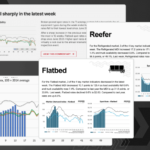
The Truckers Report — Trucking Industry Outlook
Carriers today place greater emphasis on safety records, compliance awareness, and behavioural consistency, even for beginners. While companies continue to hire, they are more selective about who they invest in. Entry level trucking jobs increasingly function as extended evaluation periods rather than guaranteed long-term placements. This reflects a broader trucking outlook where margins are tighter and operational errors are less tolerated. For new drivers, this means the first year is less forgiving but also more informative. Those who adapt quickly and demonstrate reliability often find steady opportunities, while others may struggle to meet rising expectations.
Is Trucking Worth It in 2026 and Beyond?
So, is trucking worth it?
Yes — for those who accept structure, delayed rewards, and responsibility.
No — for those expecting fast money or easy schedules.
The value of trucking in the coming years depends less on market headlines and more on personal alignment. For individuals who prefer autonomy within clear rules, trucking can still provide stability and purpose. However, it requires emotional resilience and a willingness to accept delayed gratification. Long hours, regulatory pressure, and time away from home remain part of the profession. Trucking is no longer a shortcut to income; it is a trade that rewards consistency and long-term thinking. Those who approach it with realistic expectations are more likely to find it sustainable beyond the initial adjustment period.
Trucking Tips for Beginners Considering the Move
If you plan on becoming a truck driver, follow these trucking tips:
- Talk to real drivers
- Learn hours of service early
- Treat year one as investment
Truck driving for beginners works when reality is accepted early.
Final Perspective: Are You Ready to Live Trucking?
Today, becoming a driver means committing to a demanding profession, not escaping one. The real question is not “Can I do trucking?” but “Am I prepared to live it?” The trucking industry not only demands technical efficiency but wit, it requires the mental endurance to withstand various challenges, articulation discipline, and the capability to work under the constant dual of restrictions. For nascent drivers who join the profession with a realistic view, it can actually provide discipline, solitude, and a sense of the contribution that most of the industrial jobs are devoid of. On the contrary, the harsh ingrained reality of time schedules, unplugged nature, and trust proves beyond what they can handle. There is no average collective answer but simply an individual one. trucking today is about the mindset accepted not an illusion or a promise. It is an acceptance of a life of responsibility and consistency. The same pledge can hitch you to trucking through the years if it goes with your nature.
FAQ
Is trucking worth for the beginners now?
For those who are trucking can be worth it, a firm understanding of what they are getting involved in is key. It is a profession that pays off in discipline, patience, and consistency, rather than being a hack to earn fast money. For individuals who are willing to see the results after a long time, adhere to established norms, and are ready to learn for a long time, trucking is a stable option. Instead of it being a good option, it would rather be a bad option for those who expect immediate cash and relax.
What is the life of a truck driver during the first year?
The major part of the first year trucking is usually an adaptation. Jobs in entry-level trucking mostly are related to the limited selection of routes, changing schedules, the order of the dispatcher, and constant compliance pressure. Many that are new to this experience have difficulties with the process of timekeeping, loss of sleep, long distances from home, paperwork, and stress. This is not an earning period but rather a time for understanding how the system works.
How are new drivers’ salary expectations as a truck driver realistic?
Truck driver salary expectations tend to be overoptimistic at the start. Unaccounted time spent waiting for the cargo, fluctuating mileages, and fewer freight options are the reasons new drivers don’t earn much. The understanding of the itinerary, planning, and communication with the driver dispatcher necessary for stable income only comes after drivers are adequately experienced. On the other hand, a driver’s salary increases not just from the number of miles covered, but via putting a system in place.
Are you fully prepared about the CDL training if you want to work as a long-haul trucker?
CDL training gets drivers acquainted with operating the vehicle safely and legally. However, it cannot be a full preparation for them to be life-in-trucking. Trucking training usually does not cover lifestyle management, fatigue, dispatch dynamics, or income variability. The chord challenges won’t be discovered until the employee actually starts working on the road.
Are there still trucking jobs for freshwater workers in the market?
The truckers’ job market is still viable for those who are in the initial stages, but the requirements are higher than they used to be. Entry-level trucking occupations occasionally act more as probationary periods than they do as guaranteed full-time job offers. Fleets are the main ones working on safety, consistency, and compliance, thus, the first year is decisive for proving the candidate to be dependable.
What trucking’s simple pros and cons are?
The benefits and drawbacks of trucking are almost equal. The inability to find the right job for yourself, which is an entry point via CDL training, the nationwide demand, and an increase in the salary that is tied to skill = find it hard to believe. Unforeseen long working hours, loneliness, regulatory pressure, and the fluctuation of early income all constitute the adverse effects. Appreciating both sides will keep you from feeling exhausted and quitting prematurely.
Is truck driving a long-term profession or merely a throwaway job?
Trucking is mainly a long-term career and not a short-term solution. Truckers that take the profession seriously, seeing trucking as a long-term investment, and learning the system are the ones that flourish and therefore have better earnings. The quick money attitude is what drives people out of the game in the first year.
What is the trucking advice that should be for the beginners?
Trucking counselor advice for first-year people is short and simple: connect with trustworthy drivers, get early learn of the hours of service, estimate the first year as tough, and concentrate on learning rather than income. Upholstering for newcomers should work where the premises match reality.
Should you enroll in a trucking school now?
The answer is – if you are well-prepared for the lifestyle, responsibility, and long-term commitment, you should only think about getting into trucking now. It is not about escapism or quick profits in trucking as it is today. It is a route that is demanding but gives you a chance to work and live meaningfully.