





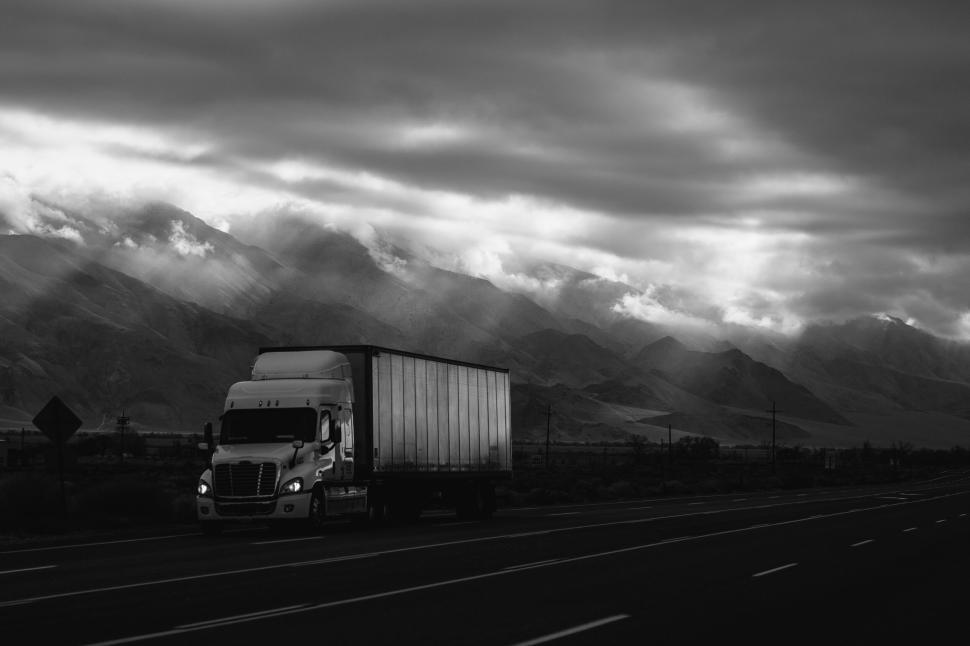
The trucking industry is a cyclical business, but much to the contrary of the normal shifts, independent drivers have had to face unprecedented economic pressures during the last few years. The owner-operator trends of this period suggest that what we used to call passing winds are now real storms in the industry. Freight rates, which are always fluctuating, increase while trucking industry expenses are spreading unevenly; on top of that, access to stable freight opportunities is becoming more challenging month by month. While the major cargo carriers can take in these shocks, owner-operators are directly, in the short term, affected by engine repair bills and financing costs — these things cause a definite impact on net income.
The article investigates rates and expenses market from the perspective of the owner of a single truck — a small business owner who has to make decisions with real cash and real time, not spreadsheets alone. Instead of the abstract macroeconomic charts, it brings the everyday operational reality into focus. The article is written with a practical goal in mind: it points out the main owner-operator costs that are most difficult to control, informs why industry volatility amplifies risk, and emphasizes that keeping today’s trucking profits, to a larger extent, relies on discipline, rather than driving additional miles simply.
Freight Rates: The Biggest Losers of Low Rates
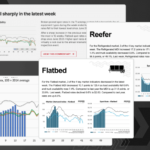
Freight rates are still the first sight of the trucking market but are the last to trust. In fact, spot rates are like rotating wheels which, despite all slip and grip, go through their cycle: up, down, and sideways. Thus, the owner-operators see the poor rates first on their end, even if fixed operating costs do not go down. Per-mile revenues fall while the costs/items remain the same.
For the independent drivers, freight rates are directly connected to load board accessibility, broker leverage, and timing. In weaker markets, competition boosts and bargaining power drops. Taking freight with a hit in elevation becomes no longer a contract decision, but a matter of survival — and one of the most common owner-operator challenges is having to accept “good enough” freight because waiting can be even more expensive.
In contrast to bigger carriers, which can switch lanes within the company, the smaller companies’ problems are amplified by the diversity of the field. One lane has a negative impact on the weak one. In such circumstances, the cost fluctuation is a less tolerated risk. A couple of poor operations can take away a week’s worth of average profit.
Diesel Prices: The Most Unrelenting Expense
For independent drivers, fuel remains to be the biggest cost mystery. Even with fuel surcharges in place, the amount does not reflect the real exposure that is incurred when running spot-market operations. Diesel prices transfer cash flow pressure, thus the immediate outcome is less money in the pocket.
Fuel is a unique item from other expenses because it cannot be postponed. Gasoline may wait, and electronic devices may be turned off, but you still have to fill your tank with diesel. This is why fuel volatility becomes even more dangerous for operators who are over-borrowed or have little cash reserves.
The inflation of diesel prices is a direct consequence of the increased prices whereas freight rates did not increase accordingly. Thus, many owner-operators have been running more miles, which results in fatigue and equipment wear — hidden costs that are often disregarded.
Small Fleet Survival: Trucking RATES update and Diesel Price climb
Equipment Prices: New Trucks, Used Trucks, and the Cost Trap
The rising equipment prices have significantly altered the economics of the owner-operator. The new truck price represents the chaos that is inherent in the supply chain, the new technological regulations laid upon manufacturers, and the power that the manufacturers have in the setting of the prices. The commission of a new truck is for numerous independent drivers, on the contrary, an unrealistic project.
Nevertheless, the used trucks — which were previously seen to be the safe option — reached the same pricing levels as well. The demand was high, but the supply of used trucks, which do not assure reliability, forced the drivers into decisions like:
- Old trucks with unreliable repair budgets
- New trucks with a large debt and high service costs
In the current situation, leasing a truck may look like a good deal. Nevertheless, leasing truck arrangements often burden the driver with market risks. Fixed payments associated with the depressed rates could slash the profits in the truck freight sector during slumps.
💵💵 How Much It Cost To Run A Trucking Business 🚚🚚 Owner Operator
Repair Costs: The Silent Margin Killer
The costs of repair have turned into one of the most unpredictable costs for the owner-operators. The modern vehicles are more and more technological, parts are by inflation going higher and the labor costs are continuously increasing — and for many operators, repair costs are now less of a line item and more of a recurring threat.
For owner-operators, the repair exposure is not only limited to the direct costs related to repair:
- The costs that you have to pay out directly
- The time that you lose in carrying out other tasks and the freight that you have to forgo
- The freight that you miss and the eventual delays in getting paid
The older the equipment is, the more cost volatility there is. Many drivers find themselves stuck between the not reliable old units and the replacements that they can not afford.
Driver Pay: When You Are the Driver
Owner-operators typically forget about driver pay; on the contrary, they are only concerned about the money that they get from their work. However, their work also entails an opportunity cost. Duty, regulatory strains and the amount of work go higher but the income stays uncertain.
During the bad times when rates are low, a lot of drivers will tend to:
- Drive for longer periods
- Take less breaks
- Transport lower-paying freight
This kind of strategy does not protect their cash flow for the long term but rather causes burnout and decreases the efficiency of drivers.
Load Boards and Freight Access: Competition Intensifies
The digital load boards are the application websites that are networked but when competing are all interlinked, thus they make it easier to team up with trucking companies and the drivers can also get direct access to the load boards that the trucking companies use. Algorithms favor logistic companies that provide faster delivery of goods, which results in a drop in the overall economy — a pressure shaped by modern logistics trends, not just local competition.
Some digital load boards were used to interest customers but this has resulted in increased competition. The situation has improved with regard to cost but the situation in the labor market has worsened. The algorithms focus on speed, availabilities, and ratings in that order, which often leads to depressed rates.
These logistic innovations hurt drivers who don’t have proper existing relations with brokers. Owner-operators depending solely on the public boards for freight access are at greater risk to the market fluctuations compared to their counterparts who possess broad freight sources.
Debt Service and Financing Pressure
Debt increases the effect of any changes in the market. Equipment loans, leases, and credit lines are financial obligations that need to be settled under all circumstances, regardless of the interest rates. Recession raises the debt burden by increasing interest rates, and this is especially relevant for the small operators.
The differences in how debt influences owner-operators are:
| Debt level | Market flexibility | Risk exposure |
| Low debt | High | Can wait out downturns |
| Moderate | Limited | Requirements for strict |
| High debt | Low | Forces rate acceptance |
For so many owner-operators, the debt service condition is a matter of survival.
The Impact of Inflation on Operating Costs
Inflation is a variable that rattles every town truck expenditure:
- Insurance premiums
- Parts replacements
- Permits and compliance fees
- Tools and services
Unlike fuel, these costs do not reverse. Such fixed inflation, which is caused by persistent failure, can erode profits even with a flat freight rate — and the inflation impact is often strongest where the operator has the least bargaining power.
Market Sentiment and Psychological Pressure
The state’s market sentiment is the driving force behind the behavior. In addition, these unfriendly markets entice suppliers into cutting their rates, and customers into rushing their purchasing choices. Carriers, such as independent drivers, therefore, feel such pressure on their decisions as those affect their earnings directly.
Enduring uncertainties will result in:
- Long-standing decision stresses
- Willingness to take more risks with the freight
- A shift from objective planning to short-term management
The profitable freight operators are the ones who develop not only financial control but emotional discipline as well.
Survival Is Still a Skill: Conclusion
The rates and expenses market does not random punish. It punishes low vigilance, insufficient buffer zones, and bad cost control.
Freight rates fluctuate. Diesel prices are still going to be unstable. Equipment costs are going to stay high. These are all fundamental features of the trucking industry today.
For owner-operators who see trucking as a business and not only driving, survival is still an option. The key to success now is not the chase of prices but the control of costs, the management of debt, and the cycle education.
More practical trucking guides (pay, safety, equipment, and career decisions) are published regularly on Intermodal Insider.
It is not always the least experienced that suffer the most but sometimes the ones who have not realized how much of a constant force of struggle it i