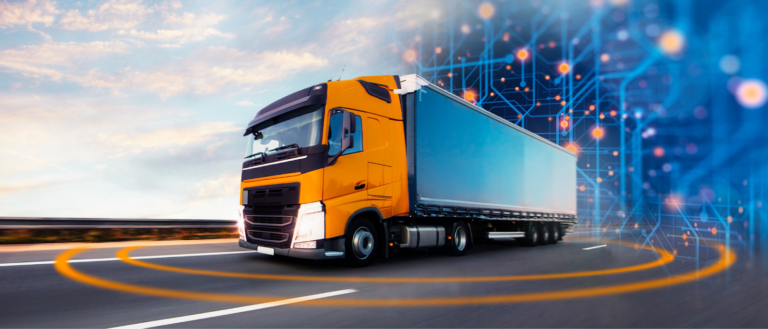

While artificial intelligence has become one of the most misrepresented notions in the trucking industry, it is the most misconceived concept. Over the past few years, trucking industry AI has been defamed as the means of full trucking self-driving, automated trucking as superior to the driver’s version, and as the equipment that does not need the human will to make unilateral decisions on transportation. Built on marketing narratives, this wishful picture has nothing to do with the operational reality.
The environment in the cab, dispatch office, and safety department shows a very different picture. Instead of radical automation, the industry is witnessing a slow, practical, and controlled AI implementation based on narrow tools. These systems are not designed for AI replacement jobs but to reduce uncertainty, improve AI safety, and support operational judgment in real conditions.
Today, the knowledge of the mental cap between AI promises and AI reality is no longer just an option, but a must for every player on the market involved in truck driving, fleet management, or logistics planning.
Why AI in Trucking Is So Often Misinterpreted
The major misunderstanding emerges from the very term, “AI”. In many truck hardware examples, artificial intelligence is not like humans at all. It does not weigh the evidence, make the judgments, or place the events in context the way drivers or dispatchers do. Rather, artificial intelligence relies on the processing of historical and real-time data where it finds correlations and assigns probabilities.
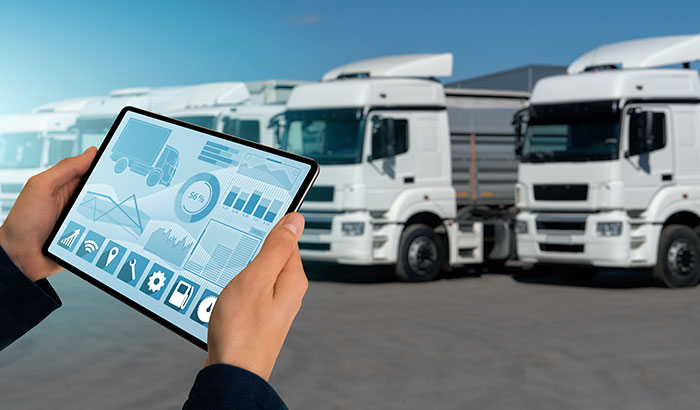
This in trucking data is made from vehicle sensors, GPS tracking, dashcam footage, engine diagnostics, traffic feeds, and compliance records. In this context, an AI responds to particular queries only: Is this braking event statistically abnormal? Is this engine component likely to fail? Does this driving pattern correlate with a higher risk?
Confusion is caused when such limited powers are touted as full autonomy. This is the birthplace of many AI myths. AI works best in controlled and repetitively structured environments. Trucking, in contrast, thrives in ever-changing situations-potentially hazardous construction zones, unpredictable vehicle operators, random dock operations, inclement weather, and legal liabilities.
The effect of this is the gaping canyon between AI hype and actual operational reality. Fleets that grasp this discrepancy are the ones that extract real benefits from AI. Those that overlook this truth tend to employ tools that fall short of potential, thus making them vulnerable to the unwanted effects.
The Illusion That AI Will Replace Truck Drivers
One of the most enduring anxieties pertaining to AI replace jobs is that drivers would soon become superfluous. This question stems from a deep misunderstanding of what truck driving truly entails.
Driving a commercial vehicle is far from just steering and controlling the gas pedal. Instead, it necessitates being able to make decisions under uncertain circumstances, dealing with sudden dangers, talking to customers, and finally, being the one that makes judgment calls in real-time.
Today’s AI systems do not cure drivers — they help them. They calculate space to the vehicle, notice and report pernicious movements, alert the driver to the signs of weariness, and all the time, they record driver behavior without bias. Crucially, these systems do not take responsibility away from the driver. In fact, many of the instances, they increase the accountability of drivers by documenting facts instead of secondhand reports or conflicting testimonies.
Even in fully autonomous trucking pilot schemes, humans are still at the center – they supervise remotely, manage exceptions and take on legal responsibility. Technology develops, but the need for human supervision persists.
The practical AI role in trucking is evident: AI cuts cognitive load and blind spots while drivers provide judgment, context, and responsibility.
Where AI Is Already Delivering Results in Truck Driving
Irrespective of the uplifted outlook, some AI implementations have actually proven to be beneficial in truck driving. These are not pilot projects but commercial enterprise applications that are already applied every day whilst improving operational results.
The clearest example of AI efficiency is edited. Machine vision systems that process dashcam video to spot near misses, unsafe following distances, and lane divergences constitute the most evident case of AI efficiency improvement. The tools are not inherently punitive; rather, they furnish a context for coaching, training, and incident review, thus reinforcing the overall good safety outcomes induced by AI.
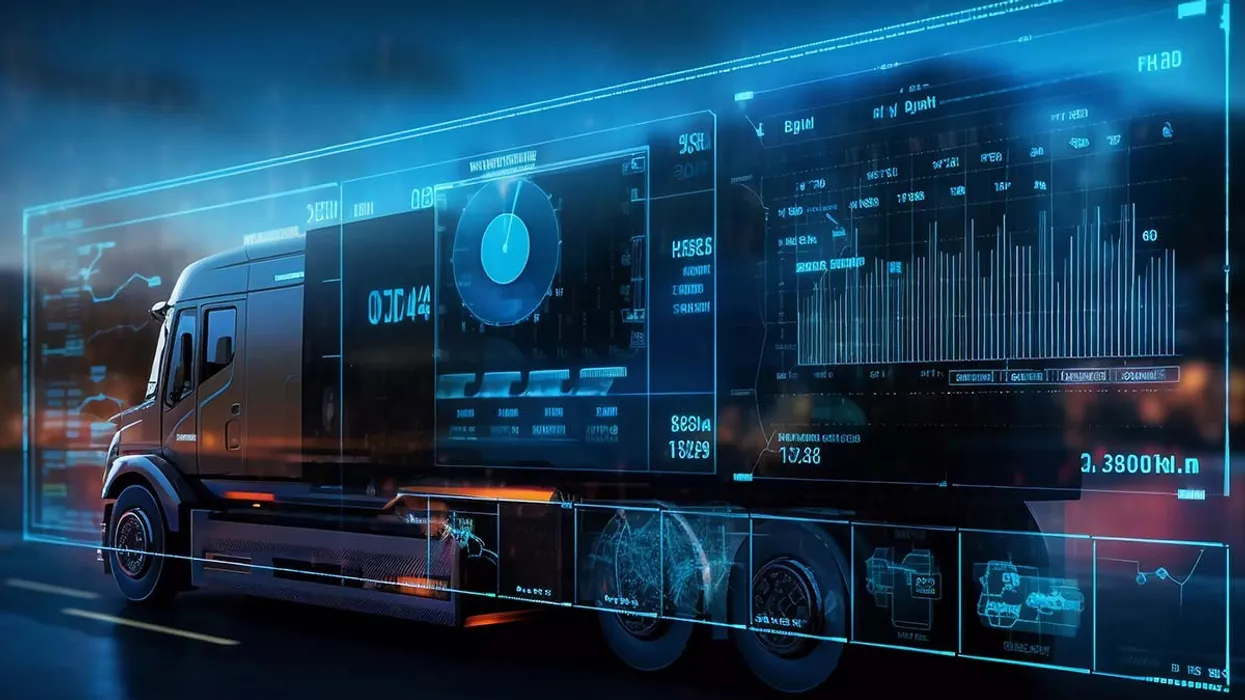
How AI is REVOLUTIONIZING the trucking industry
Maintenance is another field where AI has repeatedly delivered tangible results. Predictive models are utilized to scrutinize the engine data stuffed in with the historical service records targeting the probable component malfunction. This allows the fleet managers to preemptively schedule maintenance, hence averting those annoying roadside break-downs, as well as the expensive downtime.
Routing and scheduling have also benefited from AI-driven optimization. These systems combine real-time traffic data, weather forecasts, and historical trip information to support routing decisions that are safer and more fuel-efficient. This aspect of freight tech is a dynamically growing necessity.
Incorporation is key to success, not autonomy. AI gives signals, humans make decisions.
In practical terms, AI in trucking is already delivering value in several specific areas:
- Safety monitoring and post-incident analysis
- Predictive maintenance and failure prevention
- Route risk evaluation and fuel-efficient planning
- Driver behavior context and dispute clarification
- Compliance anomaly detection and audit preparation
The Real Role of AI in Trucking Today
When discussing AI in trucking, it is critical to separate functional progress from marketing exaggeration. What is currently described as trucking automation is, in reality, a layered support system built around human-led operations rather than a replacement for them. Most fleets that successfully deploy AI do so by embedding it quietly into existing workflows, allowing drivers and managers to retain authority while benefiting from improved visibility and foresight.
The strongest evidence of AI working lies in how it complements people, not how it competes with them. AI and drivers operate in tandem: the system continuously analyzes data streams—vehicle telemetry, video footage, traffic behavior — while the driver interprets the situation, applies judgment, and remains legally responsible. This relationship reduces cognitive overload without removing accountability. That balance is where real AI benefits emerge: fewer blind spots, earlier warnings, and more consistent decision-making under pressure.
The same principle applies to AI and logistics. Planning systems may forecast demand, optimize freight flows, or adjust pricing models, but they do not drive trucks or manage roadside realities. Execution still depends on humans, supported by AI-generated insights rather than controlled by algorithms. Expecting logistics intelligence to fully govern driving decisions misunderstands both roles.
Even conversations around self-driving trucks reinforce this point. Autonomous systems function only within tightly controlled environments and always rely on human oversight. Rather than eliminating labor, autonomy shifts responsibility and introduces new operational constraints.
In practice, AI succeeds when treated as infrastructure, not authority. It enhances clarity, improves safety margins, and stabilizes operations—without pretending to replace the human element that trucking fundamentally depends on.
AI in Practice vs AI in Theory
| Area | How AI Is Used Today | Human Responsibility |
| Safety | Risk detection, video analysis | Response and judgment |
| Maintenance | Failure probability modeling | Repair decisions |
| Routing | Optimization suggestions | Final route approval |
| Compliance | Log anomaly detection | Corrections and audits |
| Dispatch | Load scoring | Assignment decisions |
This balance explains why AI adoption feels evolutionary rather than disruptive. When AI transportation tools work well, they become part of the infrastructure rather than a visible replacement for people.
Autonomous Trucks: Why the Hype Persists
Auto-pilots in truck driving represent the extreme-effective and the costly– at times almost inaudible. Most speeches unexplained-packing autonomous trucks with feats so extravagant that the trucks appear to have been lifted from a sci-fi film.
Nonetheless, autonomous systems are in fact reliable only when operating in narrowly defined conditions: for example, on a confined route, with a predictable amount of traffic, where lane markers are clearly visible, and with constant supervision. When conditions are altered, say during urban deliveries, dock operations, or bad weather, the system returns to the human operator faster than you can say “robot”.
More importantly, autonomy is not a means of getting rid of accountability; it is a means of redistributing it. The legal responsibility is shifted from the driver to the system operators, engineers, and the regulatory frameworks that are also in constant change.
At present, autonomous driving is not a catch-all but a targeted tool within AI transportation and isn’t meant to be something that drivers lack.
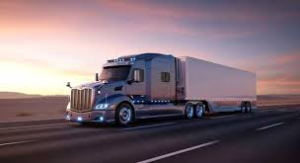
Autonomous Driving: Smart Trucks, Smarter Transportation
AI in Logistics vs AI in Truck Driving
Another frequently encountered error concerns the connection between logistics AI and truck AI driving. Logistics AI is specialized in demand prediction, freight matching, pricing lines, and optimizing networks, while these are the targets of general applications.
AI in truck driving is tactical. It mainly concerns vehicle performance, mechanical safety, accident reporting, and adherence to the regulation.
The concept of logistics AI dealing with driving decisions is a misconception that facility between driving and logistics AI has no similarities. One optimizes the total system, while the other assists with execution.
The Real Risk of AI Hype for Fleets
AI’s greatest risk lies not in technical failure but misplaced trust. Fleets that treat outputs of AI as neutral or infallible are putting themselves in a position to subvert judgment to systems which lack contextual knowledge.
AI models reflect the training data they have been given. Any sort of bias, missing data, or misassumptions can shape the outcome. Thus, responsible AI implementation requires checks and balances, as well as human mediation and oversight through persistent review.
AI should give the information needed to make decisions, not take human responsibility away from the decisions made.
What the Next Five Years Actually Look Like
| Expectation | Likely Reality |
| Driver replacement | Driver support and augmentation |
| Full autonomy | Limited, supervised autonomy |
| Hands-off fleets | Human-in-the-loop systems |
| Lower labor needs | Lower uncertainty and risk |
| AI decision-making | AI decision support |
The trucking industry matures through reliance on reliability, not through disruption. AI correlates with this model as infrastructure, not as the means of revolution change.
Final Thought: AI as a Tool, Not a Threat
The future of the AI role in trucking is not about the elimination of people. It is all about providing better information, earlier warnings, and clearer visibility.
AI succeeds in the background — preventing breakdowns, clarifying disputes, reducing accidents, and fueling better planning. Thus, it is evident that AI, when addressed realistically, rather than seen as something that is threat to the profession, would in fact, augment the truck driving industry.
The challenge is not to fast-track the adoption of AI.
The challenge is to adopt it wisely.