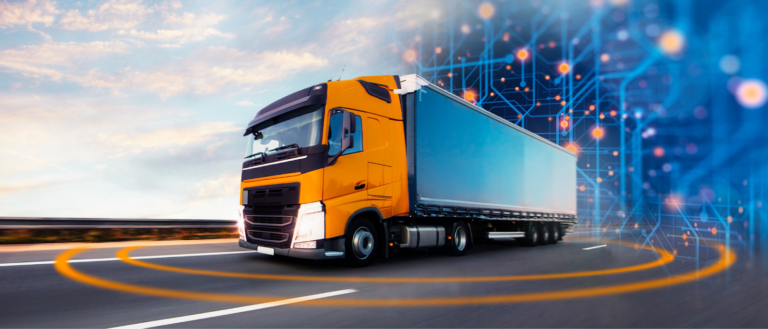





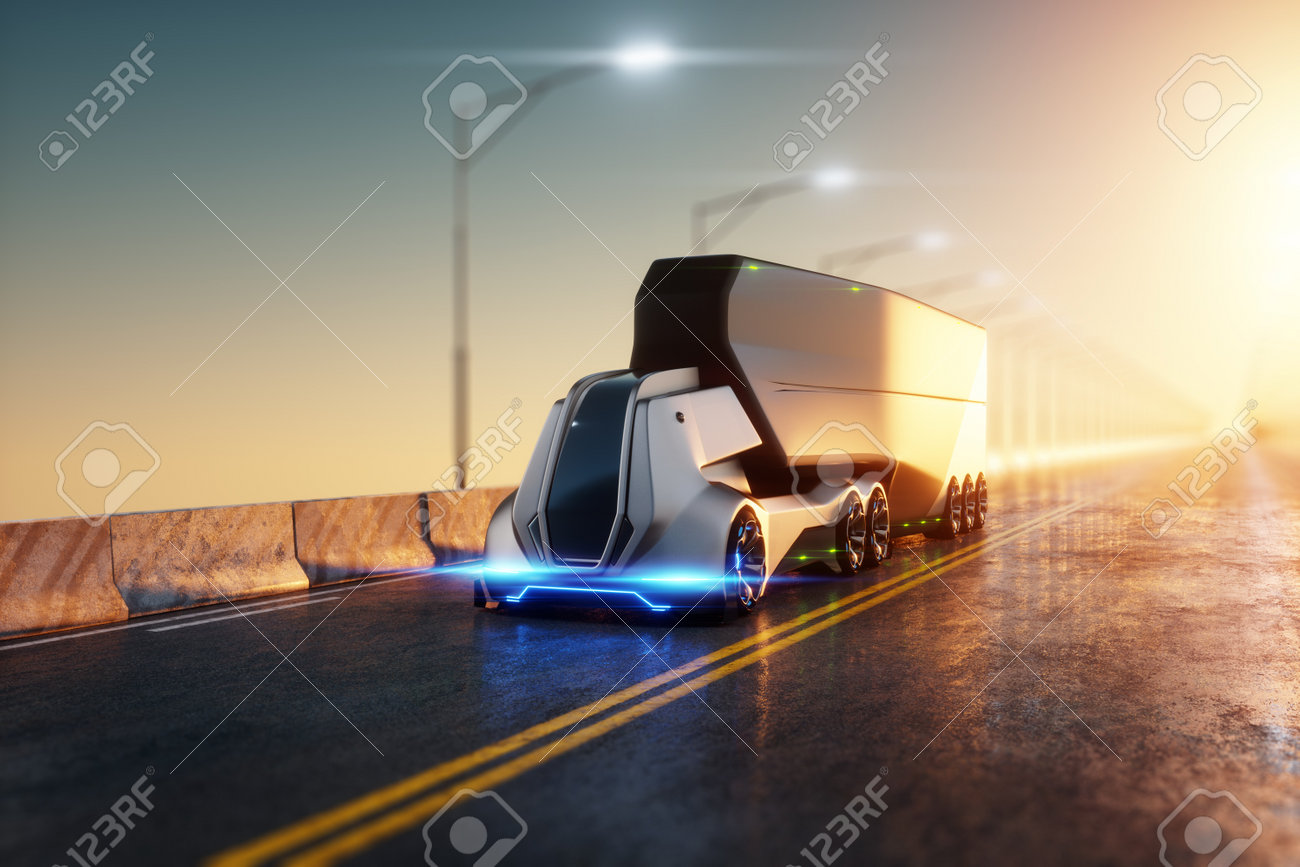
The concept of driving no trucks has been a hotly debated topic among truckers for the past decade. Articles suggest huge fleets with driverless trucks on their roads, self-driving trucks that move freely to other states, and a science fiction-like future when fully autonomous technology takes over completely the driving functions. On the contrary, many drivers see these predictions as mere fantasy that contests their competence, fuels fears, and exacerbates long-running issues in the truck driving field.
These narratives have intensified long-standing truck driver concerns about job security and the future role of human drivers.
Nevertheless, the stark reality vastly differs from the perceptions people commonly hold.
The everyday trucking reality is shaped more by operational limits than by technological ambition.
Autonomous trucking cannot be more complex than what popular media presents. Due to the combination of aspirations, legal constraints, technology problems, and practical demand, the autonomous vehicle segment does not look like the standard portrayal at all. In the context of the trucking industry, unattended systems are, if anything, more limited than what most people think. Thus, it is crucial for those seeking truck driver jobs now and in the future to acknowledge the full range of what autonomous trucks are and more importantly, what they are definitely not. In practice, autonomous vehicle technology in trucking operates within narrowly defined conditions.
These constraints directly define the real impact on drivers, affecting job structure rather than eliminating roles.
This article aims to debunk the autonomous myths and give a detailed explanation of what autonomous trucking means for truck driver employment, job stability, and the future of the industry.
The Misconception of Fully Driverless Trucks
The most exaggerated myth about autonomous trucks is certainly the one that says they will soon overtake the roads, and will hence, put an end to truck drivers’ jobs. This convoluted view seems to work on the hypothesis that by eliminating labor costs and drivers, a fully autonomous truck would carry goods from one coast to another without any human involvement, which in turn, would create mass unemployment for drivers.
Claims of inevitable driver job displacement remain speculative and unsupported by current operations.
In fact, there are no cases that have come to the public eye where this has happened and even if they did, all the reasons are either technical or operational which prevent everything from being done as planned.
Developing autonomously driven technologies operates only within the bounds of acute specificity and task-related applicability. The very models of a self-driving bus blocking off traffic are conceived in situations that not even the most skilled professionals can foresee — not to mention the possibility of vehicles that would self-operate through weather conditions of a tornado. Trusting the shared vehicles with no human being present is a faraway dream.
Even the most advanced self-driving semi systems require controlled environments and human oversight.
Much of the fear surrounding automation comes from overstating the real capabilities of self-driving technology.
Long-distance transport seldom involves the driver just holding a steady course. Weather prediction, a truck’s mechanical health check-up, unloading freight at the dock area, and customer service are additional responsibilities that reflect the advanced image of a truck driver today.
The Definition of “Level 4 Autonomy”
Much of the debate around autonomous trucks results from the misuse of terms. For example, companies should observe that level 4 autonomy mostly refers to full self-driving capacity.
In reality, level 4 autonomy means:
- The truck can operate without a human driver only under specific conditions
- Routes are pre-planned and geofenced
- Human intervention is required outside defined parameters
- Operations are typically hub-to-hub, not door-to-door
This level of automation does not remove drivers from the logistics chain. Instead, it reshapes how drivers interact with freight and technology, particularly in controlled autonomous logistics environments.
Autonomous Trucking: A Fleet of One, Not a Replacement for Drivers
From an operational standpoint, the autonomous truck benefits are real, though limited.
Automation can:
- Reduce fatigue-related incidents
- Improve fuel efficiency through optimized driving patterns
- Increase asset utilization on predictable routes
- Support overnight or low-traffic corridor movement
Nevertheless, these benefits do not imply that eliminating drivers is the end result. What they actually do is reorganize operational processes.
Most autonomous logistics models still require human drivers for:
- First-mile and last-mile delivery
- Complex urban navigation
- Yard work and docking
- Equipment inspections and fault resolution
Automation does not remove drivers from the supply chain; it reallocates where human expertise is applied.
Reality of Driver Shortage and Automation
Automation debates frequently overlook the ongoing truck driver shortage affecting the industry.
There is a widespread perception that truck automation is a result of the fact that truck drivers are not needed anymore. However, this is in direct contradiction to the shortage of truck drivers which is still a fact.
Aging workforce, long-haul lifestyle, high turnover, constraints in training and onboarding keep the industry still struggling.
Not only are autonomous trucks not an answer to the over-employment of workers but they are mainly a means of addressing operational inefficiencies and instability in terms of capacity. The approach in practice is to consider automation as a potential way of stabilizing freight flow and preserving truck driver jobs.
Drivers’ Contribution: Role Change, Not Replace
Drivers are mostly affected by their change of roles rather than direct replacement caused by the introduction of automation.
With the evolution of autonomous trucks, truck driver roles are expected to transform into:
- Regional and local routes
- Supervising automated systems
- Remote monitoring and intervention
- Specialized freight requiring judgment and adaptability
This is the reflection model of technological progress in shipping. The shift has been far ranging; each new invention has affected the drivers’ methods of doing their job but not whether they are still needed or not.
Artificial Intelligence in Trucking: Limited Scope of Replacement
Expectations around AI in trucking often exceed its real-world decision-making capabilities.
AI is wrongly presented as a thinking system able to drive cars by many, but the truth is AI systems process patterns and improve results — not decisions.
Self-driving technology lacks:
- Contextual risk
- Human unpredictability
- Ethical trade-offs
- Operational exceptions
Truck automation manages consistency. Drivers manage complexity.
This is the main reason why autonomous trucking still heavily relies on the skilled workforce.
IAA Transportation 2024: Autonomous trucks – a game-changer in long-haul transportation
The Real Autonomous Trucks Today
Analyzing the actual implementations gives a better idea of the operational parameters of autonomous trucking. Most of the autonomous systems function in tightly controlled freight corridors rather than mixed open environments.
These corridors, in general, consist of limited-access highways, predictable traffic, stable weather conditions, and strong digital mapping. Usual operations are between fixed hubs and not at customer docks.
This operational model decreases variability but also restricts the scope. When the irregularities are brought up, such as road construction, weather changes, congestion, or client-specific access, truck drivers will be called to play a larger part.
The turn on drivers confirms that autonomous trucks are not eliminating the work it brings; it redistributes the part of freight accordingly. Automation takes on the most typical miles, while drivers carry out the more complex, customer-responsive, and judgment-driven tasks.
Regulation as the Major Limiting Factor
Beyond technology itself, autonomous truck regulation remains a primary barrier to large-scale deployment.
In the event that technology evolves at a much quicker rate, autonomous regulators will still be the primary limiting constraint.
The existing framework specifies:
- Clear accountability for crashes
- Defined responsibility for vehicle control
- Human oversight in commercial transport
- Compliance with state and federal safety standards
Liability, insurance, enforcement, and cross-state consistency are unresolved barriers to widespread autonomous deployment. Regulation moves slower than technology — and in trucking, this friction protects both public safety and driver employment.
Driver Training: Here To Stay
Rather than going away, truck driver training will likely undergo an expansion.
Future training modules may include:
- Supervising autonomous systems
- Managing handoff points between automation and manual control
- Understanding AI-assisted diagnostics
- Operating in hybrid human–machine fleets
Drivers with strong fundamentals and adaptability will benefit most from these changes.
What the Future of Trucking Looks Like
The future of trucking is not driverless — it is driver-supported.
Autonomous trucks will:
- Operate limited, predictable routes
- Support drivers rather than replace them
- Reduce strain in specific operational niches
- Expand logistics capacity without removing accountability
Truck drivers will remain essential wherever judgment, flexibility, and responsibility matter.
Final Reality Check
Autonomous trucking is neither a dream nor a threat looking to wipe out drivers. It is a set of tools that were designed for a specific purpose within the trucking industry.
The biggest myth is not that autonomous trucks are going to replace drivers, but rather the belief that trucking has ever been simple enough for that to happen.
For drivers, awareness is more important than fear. Only through comprehending the actual working of automation can the professionals enrich, remain relevant, and lead in the transforming trucking industry.
In trucking, technology changes — responsibility stays human.
Autonomous Trucks vs Human Drivers (Reality Comparison)
| Aspect | Autonomous Trucks | Human Drivers |
| Route flexibility | Limited to predefined corridors | High adaptability |
| Weather handling | Restricted conditions | Full-spectrum judgment |
| Customer interaction | None | Essential |
| Docking & yards | Highly limited | Core responsibility |
| Accountability | Shared / regulated | Direct |
Likely Driver Roles in an Autonomous Trucking Environment
| Role Type | Human Involvement |
| Long-haul hub-to-hub | Partial / supervised |
| Regional freight | High |
| Urban & last-mile | Full |
| Yard & docking | Full |
| Exception handling | Full |
FAQ
Will self-driving trucks displace human drivers?
Contrary to the assertions of many, self-driving trucks cannot take the place of drivers completely yet. The existing autonomous vehicle technology is used only in a few specific scenarios and still relies on a human being to oversee it. The thought of massive job losses for drivers fails to recognize the complex nature of freight transport operations and the necessity of people using their brains to conclude. This question frequently appears in industry discussions grouped under LSI keywords related to automation and employment.
What is the role of autonomous driving in the future of truck driver jobs?
The most significant change for truck drivers will not be that they are fired but rather that their duties are going to be modified. Automation crucially alters the route design and task distribution, while the drivers are still in charge of the first-and-last-mile, and exception-based operations. In numerous instances, the drivers benefit from automation since it raises their output rate rather than it being directly responsible for the job reduction.
Is the truck driver automation issue the result of automation?
No. The existing truck driver shortage is mainly due to aging workforce, turnover, lifestyle pressures, and training bottlenecks due to snail pace — not because of automation. Autonomous systems are normally taken seriously as one of the means to deal with the capacity issue instead of being presented as a driver replacement.
What is the tech maturity level for autonomous trucking?
The actual quantum of technology is depicted in real-world scenarios appropriate for autonomous driving systems only. Even though today’s self-driving trucks are far more advanced than in the past, they still need human help to tackle unforeseen weather, urban configuration, customer docks, or regulatory exceptions.
How does AI enhance trucking today?
AI is mainly applied in trucking for recognizing, optimizing, and monitoring patterns. However, it doesn’t replace human decision-makers. Drivers remain as people who take charge of the situational risk, moral judgment, and unexpected operational confrontations.
What are the regulations imposed on the self-driving trucks?
Autonomous truck regulation is one of the obstacles for large-scale deployment. Liability, insurance responsibility, safety compliance, and cross-state enforcement just need clear accountability to humans, and so, it restrains unrestricted autonomous operations.
Should drivers feel worried about autonomous trucks?
Although one can easily comprehend the worries of truck drivers, the current scenario in trucking has shown that the automation only redistributes the work instead of the elimination of it. Adaptable drivers to the hybrid human–machine environments are the ones who will be able to possess the key role in the sector.