
The truck driver profession does not simply diminish, but rather it transforms itself in accordance with the circumstances. It is between 2026 and 2030, when a professional driver will be able to operate a large vehicle, but instead of a pure vehicle operator, he will also work as a road execution officer, a technology manager, and an operational awareness specialist in the freight industry that is rapidly changing.
The transformation is not a result of the hype surrounding fully autonomous vehicles, but the factors that are actually affecting it: shrinking price margins, supply chain material complexities, regulatory pressure concerning hours of servicing, and AI-assisted logistics integration into every fleet activity so deeply that it becomes part of daily work. Truck driving is still a significant part of freight transport; but, the inner value of the truck driver experience is no longer the same.
Steering Wheel to Strategic Logistics Jobs
Driver value was traditionally expressed by the number of miles traveled and the punctuality of delivery. In the period from 2026 until 2030, the value will be more about the driver’s knowledge of the logistic system.
Current fleets are largely dependent on drivers who are able to:
- interpret decisions about route design,
- adapt to dynamic rerouting,
- communicate operational constraints upstream,
- and understand how their actions affect supply chain performance.
Drivers will not be turned into office planners, but they will be frontline operators in strategic logistics. A driver who comprehends the route selection reasons, how traffic congestion impacts downstream deliveries, and the existence of time buffers is perceived as more valuable than a driver who only acts on instructions.
Truck driving associated with decisions made is now an active profession, not a passive one.
Autonomous Vehicles Are Not the Substitutes for Drivers — Rather They Mold Them
Despite the fact that autonomous vehicles have been a target for negative headlines, no human drivers will disappear between 2026 and 2030. Instead, they will change the place and time for human responsibility.
Autonomy has the high efficiency in the limited, controlled conditions. Under these external conditions, human monitoring is still the vital component. Here tele-operations come in as a new layer of driver engagement.
Drivers can:
- monitor multiple vehicles remotely,
- intervene during edge cases,
- manage yard movements,
- or assist autonomous trucks during complex transitions.
The drivers’ role is not occupied with manual control any more. Instead, it is about exception handling, risk assessment, and operational judgment. This change of paradigm gives a reward to those drivers who are knowledgeable of system behavior and not just vehicle behavior.
Driving an Intelligent Future with Autonomous Trucks
From the Cab to Strategic Logistics Roles
Between 2026 and 2030, the strongest shift in the profession is not technological. It is structural.
The modern professional driver is constantly moving into strategic logistics roles, even though he is still sitting behind the wheel. The transition is not formalized by titles but by responsibility. Drivers are more and more required to understand how their decisions affect schedules, asset utilization, compliance windows, and downstream supply chain operations.
Sensor literacy is the fundamental way to go through this change. Trucks are functioning more as rolling data platforms than before, with drivers being the first to interpret them. Understanding sensor alerts, how camera systems interpret risk, and the situation when automated warnings contrast with real-world context has turned into a must driver’s skill.
This literacy prevents fleets from false assumptions, boosts safety outcomes, and strengthens the analysis of what happened after a certain situation.
With time, many drivers step into the roles of consulting logistics inside their fleets. They give advice to dispatchers on route feasibility, educate planners about real-world constraints, and translate system-generated recommendations into the actions that should be taken on the road.
In an evolving freight economy, the professional driver becomes a stabilising force — translating system data, managing uncertainty, and protecting operational continuity where automation alone cannot.
In the particularly changing freight economy they work in, which involves volatility, slim margins, fast, and adaptable route adjustments, their help is mandatory.
Right beside that, technology management becomes inextricable part of driving. Managing dashboards, compliance tools, AI-assisted logistics platforms, and telematics feedback is no longer optional. The most reliable drivers are those who can operate technology without surrendering judgment to it.
These changes bring about the starting point of the new truck driver. Career progression is not only about the number of kilometers or the time spent driving, but also about how fast one adapts, communicates, and thinks about the system as a whole.
The driver’s most valuable skills now are at the intersection of road execution and operational intelligence.
In this new model, the driver is not only the cost center or executor of instructions. But they have also become a strategic operator — the one who organizes the decision-making processes in complex systems through human judgment.
Sensor Literacy: The New Alignment for Drivers
Sensor literacy — this is one of the most underestimated changes — will testify to the presence of this issue.
In the pool of trucks between 2026 and 2030, there will be numerous cameras, radars, engine sensors, braking systems, and weather stations that will generate a huge amount of data.
Future drivers will have to:
- know what sensors detect (and what they don’t),
- tell the difference between true and false positives,
- identify any inconsistencies in the data,
- and explain accurately any anomalies.
This is not engineering, but operational data awareness. Drivers who are capable of explaining what the truck “saw” and what really happened turn into essential players in the integrity of safety, accident reconstruction, and insurance claims resolution.
Sensor literacy is directly stressing road safety, legal coverage, and fleet oversight.
AI-Assisted Logistics and the Development of Data Dashboards
AI-assisted logistics is a tool used not replaced by drivers, whereas it totally changes the way the information flows to them.
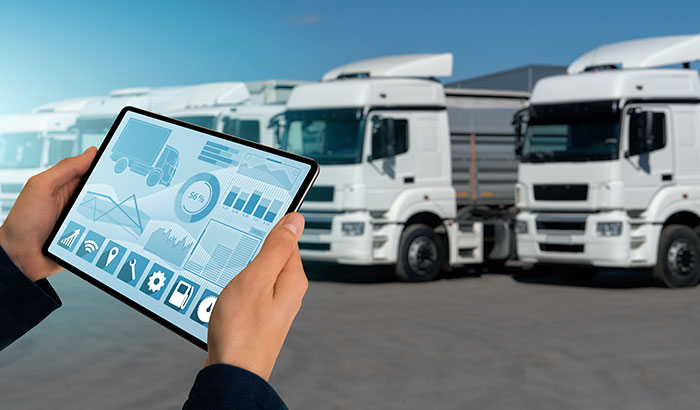
In place of ordinary instructions, drivers are more and more communicating with data dashboards which demonstrate:
- route risk indicators,
- delivery time confidence,
- fuel efficiency projections,
- maintenance alerts,
- and relevant compliance warnings about hours of service.
The best drivers are the ones who:
- analyze these dashboards critically,
- spot the conflict between recommended systems and real-world conditions,
- and highlight issues early.
This technique is changing drivers into technology managers who, while at the forefront of operations, are able to protect both safety and profitability.
Vehicle Maintenance Awareness Grows from Reactive to Predictive
A future truck driver job description will include the knowledge of vehicle maintenance signals that go beyond the mere art of mechanical repair.
Drivers who can:
- identify signs of early warning,
- report subtle differences in performance,
- and align their driving behavior with predictive maintenance schedules,
assist the fleet in avoiding downtime and potentially costly roadside repairs.
This relates directly to long-term asset health and fleet oversight.
Maintenance literacy shifts from individual skills to an identity — not because of the initiative taken by the drivers who fix trucks but rather through informed operation that they protect them with.
Communication, Mentoring, and the Rise of Logistics Consulting from the Cab
Different fleets have technology that is spread unevenly, and drivers have different experiences, hence veterans are acting as:
- internal mentors,
- technology translators,
- and informal consultants of logistics.
Old timers teach the junior drivers about AI systems, telematics feedback, and compliance rules that are constantly changing. The fleets get a boost from having drivers who can coach their peers, explain the systems clear, and connect the software logic and road rationality.
This is an upward mobility path that will usher in:
- driver training,
- safety leadership,
- fleet oversight,
- and tech mentoring roles.
Human Judgment Is Still the Missing Piece
The freight business that is marked by change is recognized for being consistent, safe, and flexible, not for the blind use of machines.
AI has a superior capacity for pattern recognition but humans are masters of contextual understanding.
Drivers will continue to be the backbone of the transportation industry because they are seen as:
- managing the unknown,
- handling the out of the ordinary,
- communicating the subtle differences,
- and taking responsibility.
Between 2026 and 2030, the most systematic drivers, not the fastest, will have the most value.
The Most Precious Driver Skills in 2026–2030
| Skill Area | Why It Matters |
| Strategic logistics awareness | Aligns driving decisions with supply chain operations |
| Sensor literacy | Improves safety, dispute resolution, and trust |
| AI-assisted dashboard interpretation | Prevents blind reliance on automation |
| Tele-operations readiness | Enables hybrid human-autonomy workflows |
| Maintenance awareness | Reduces downtime and asset risk |
| Communication & mentoring | Strengthens fleet capability and retention |
| Technology management | Keeps humans in control of complex systems |
Final Perspective: The Professional Driver Is Evolving, Not Disappearing
The driver of 2030 does not fade away, rather he is elevated. Truck driving is changing from a simple activity into a profession based on awareness, judgment, and system-level thinking.
A steering wheel still matters, but comprehending the surroundings is the key to success.
In the future, the best drivers are not only moving freight but also operating the freight system itself.
FAQ
What is the difference in the future truck driver jobs from the traditional roles?
Driving hours or mileage are not the only things that define future truck drivers. With the entry of the profession into the Integrated Driver System, the future truck drivers will primarily switch from driving to routing decisions between 2026 and 2030. They are expected to interpret the routing logic, sensor feedback, compliance windows, and how their actions will influence the supply chain performance. The role will convert from pure vehicle control to operational decision-making in a connected freight system.
Will the introduction of technology and automation drive down the demand for drivers?
No. Technology alters the work of drivers; it does not remove their necessity. Automation and AI-assisted logistics make uncertainty and manual workload less, but they need more skilled drivers who can interpret data, make exceptions, and judge. In a changing freight economy, trustworthiness and human decision-making are still fundamental.
What drivers’ skills will be the most valuable in the coming decade?
Besides good driving skills, other important skills include sensor handling, technology management, strategic logistics knowledge, communication, and mentoring. Drivers who could interpret reports from systems, confront incorrect alerts and work along with dispatch and planners are the key to fleet stability and safety.
In what way does the freight economy change the role of a driver?
The freight economy has tightened margins, demand has also become volatile, and compliance has also become stricter. So, the drivers now have to be more diligent in protecting efficiency and continuity. Their input shapes route feasibility, timing buffers, maintenance planning, and risk management, therefore they not only execute but also contribute to operational strategy.
Have cars replaced drivers’ decisions due to independence from them?
No. Autonomous characteristics only operate in strictly controlled environments and they require human supervision. The logic of the driver is still a key part in making decisions in exceptional circumstances, interpreting the context, and being accountable. Instead of taking away the drivers, autonomy is redefining where and when their expertise is applied.
What are the reasons for the sensor literacy to become a must for societal drivers?
The current trucks produce a large amount of data from various sources such as cameras, radars, and onboard systems. Drivers that know the sensors well and what they detect, and most importantly, what they cannot detect will prevent false assumptions, improve road safety, and support accurate incident analysis. Sensor literacy creates a bond of trust between drivers, fleets, insurers, and regulators.
Is truck driving really still a long-term career?
Yes – but it is a different type of career. Truck driving is being transformed into a profession based on probation, adaptability, and system-level thinking. Drivers who adapt to both technology and the freight environment will be able to take on new roles in training, fleet management, logistics consultancy, and operations leadership.